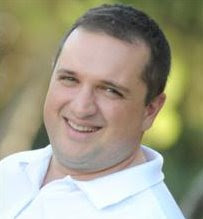
He comes straight out of the PN’s ‘broad church’. But is the party stretching itself beyond its limits by fielding anti-Spring hunting and pro-divorce Edward Demicoli?
It was a Nationalist government which applied for a derogation from the Birds Directive, the EU’s law against Spring hunting, under the terms of Article 9. This right was specified in the Accession Treaty on Malta’s insistence in 2003.
Now that the European Commission has started infringement procedures against Malta, for its breach of the Birds Directive by derogating from the ban on spring hunting without having justified it in the first place, the same Nationalist government has vowed to defend the derogation permitting hunting for quail and turtle dove in Spring, at the European Court of Justice.
But Edward Demicoli, a former officer for the Malta EU-Information Centre, and now assistant to Joanna Drake, former PN candidate for the European Parliament and today the head of representation for the European Commission, will not use his seat in the European Parliament to defend the government’s and his party’s stance on Spring hunting.Indeed, if a resolution is tabled in the European Parliament calling for the abolition of Spring hunting in Malta, he will “certainly vote in favour”.
Demicoli insists his call to abolish spring hunting is a personal opinion and has nothing to do with the government’s case in the European Court of Justice. “This is my personal opinion. I do not believe Spring hunting is sustainable.”Why didn’t he express this opinion before?
“I did so on the first occasion I had to express my personal opinion. I was not a politician before I announced my candidature.”
Demicoli’s stance on hunting has not only earned him the rebuke of the Hunters’ Federation, whose secretary Lino Farrugia has ordered a boycott against him; but also that of Nationalist MP Philip Mifsud, who reminded Demicoli that the promise made to hunters “should be honoured, till the end, and by everyone within the party... even by newcomers like Mr Demicoli.”
But Demicoli insists that he remains free to express his views within the party. “I am proud of contesting with the PN because they don’t put a gag on your mouth by putting a €15,000 fine on your head,” a snide remark at the PL’s decision to fine any MEP candidates that don’t abide by party directives.
Demicoli was deputy head of the MIC for the four years prior to the EU referendum, having consistently offered the derogation from the Birds Directive as a lifeline for hunters. But had the MIC been too economical with the truth when it told hunters that Spring hunting will remain if Malta joins the EU?
“Not at all… we were correct. On Spring hunting we were simply there to tell the people what was negotiated. That is exactly what was negotiated. We could not foretell that three years later there would be a reinterpretation because of the Finnish court case in 2005.”
Even on divorce, yet another untouchable issue for Nationalists, his position deviates from that of the party’s establishment. Demicoli states he will “surely vote in favour” in a referendum on divorce, even if he prefers divorce to be introduced through a free vote in parliament. “This is not a matter which should be decided through a referendum. A serious analysis of the situation should be made and on the basis of this, the necessary measures taken by parliament.”
He also qualifies his support for divorce by advocating measures aimed at strengthening families. “There is no single solution to the problem of marital breakdown. But I believe that divorce is one of the solutions. But apart from introducing divorce we have to take measures which strengthen the family. For example people, who opt for a civil marriage should also be offered marriage preparation courses.”
Although the European parliament has presently no jurisdiction on moral matters like divorce and gay marriages, it often votes on resolutions urging member states to introduce gay marriages. And both PN MEPs David Casa and Simon Busuttil have voted against these resolutions.
While favouring the recognition of same sex partnerships, Demicoli opposes gay marriage. “Discrimination based on sexual orientation is unacceptable in all cases. But the definition of marriage as a union of a man and a woman should remain. On the other hand all couples who live together including same sex couples should enjoy the same civil rights.”Despite all the rhetoric we hear on balancing work and family duties, Maltese MEPs have been united in defending Malta’s opt-out from the working time directive which limits working time to an average of 48 hours during a 12 month period. Demicoli says he will not break ranks with this ‘united front’, even if he recognises that the directive is not as draconian as many in Malta make it out to be.
Demicoli points out that the directive does not limit any extra number of hours of part-time work. And workers can work more than eight hours of overtime in particular months, if they work overtime in other months. “Practically one can work all the overtime hours allowed by the law in the summer months. It leaves leeway.”
He also recognises that the law was introduced to protect workers. “One cannot disagree with the intention behind it. But one has to look at the local context where a large number of people depend on overtime… the opt-out for our country is the best solution. Even the trade unions want the opt-out to remain. Ultimately it is a good thing that workers determine how much overtime they make.”
Demicoli does not stray too far from public opinion on the sensitive issue of illegal immigration, opposing any reduction of the 18 months’ detention period while calling for more “burden sharing” between member states.“I agree with 18-month detention periods. Our country’s problems are what they are. Of course they should be treated humanely but we should not make it easy for those coming here. A deterrent is necessary.”
Yet he does not mince his words describing those proposing that immigrants should not set foot in Malta as crazy. “Whoever says these things does not know what he is saying. Such statements are crazy.”
So what is the solution advocated by Demicoli?
“While immigrants who have no right to stay should be repatriated to their country of origin Malta should only take a percentage of those granted protection or refugee status, while the rest are shared with the other member states.”
Demicoli defends the agreement reached between member states, which foresees the voluntary relocation of migrants to those countries who are willing to do so. “Don’t tell me that we can in any way go to the United Kingdom forcing them to take 50 immigrants. But if a country starts taking migrants on a voluntary basis others will be encouraged to do so.”He lambastes Azzjoni Nazzjonali and the Labour Party for making a fuss about this issue. “The truth is that neither Joseph Muscat nor Josie Muscat can force anyone to take migrants from Malta.”
And he is also aware that there is no way in persuading some European countries to share Malta’s burden. “Some countries simply do not care about Malta. Countries like Denmark insist that they have their own problems and will never take immigrants from Malta.”
Most opposition to burden sharing comes from the right-wing parties, some of which are represented in the European People’s Party. Does he see this as a problem? “Not really. The main obstacles to burden sharing are not raised in the European Parliament but in the European Council by member states.”
Nor does Demicoli have any qualms in singling out Libya as a major cause of Malta’s immigration problems. “The real problem is Libya. We have a neighbour which refuses to abide by international law. Spain does not have the same problems with countries like Senegal.”
The Maltese also can do their part by not employing illegal migrants illegally. “This only serves to attract more irregular migrants attracted by the prospect of employment in Malta as immigrants do not distinguish between legal and illegal employment.”
On the other hand Demicoli believes that those who have a right to stay should be offered legal employment to avoid the exploitation of cheap labour. “In reality we did not experience any surge in unemployment since immigrants started coming over to Malta. Our unemployment remained low.”
Demicoli sees his candidature for the EU parliament as a continuation of his EU-related career, which now has spanned a decade. He served four years as Simon Busuttil’s deputy in the Malta EU Information Centre. “They were four very difficult years in which we were explaining to the general public all the issues at a time when many were scared and apprehensive.”
Demicoli’s relationship with MEP Simon Busuttil goes a long way, to the time when they worked together in Radio 101. “We are now certainly competitors but we are still good friends. It is a friendly rivalry.”
In the past four years, Demicoli occupied the post of press and political officer at the European Commission’s representation in Malta. His work consists in informing the general public on what Brussels is doing and giving feedback to Brussels on what the general public is actually feeling.
Is there a big gap between EU institutions and the citizenry? “Certainly there is a gap which has to be bridged. Sometimes Brussels does not understand the reality of a small island. Most of my work in the past four years centred on making sure that they understand the specific realities of this island. All EU laws are basically good as nobody makes laws to harm people. But one cannot apply these laws in Germany, and in the same manner in Malta.”
The European Parliament is often criticised for being a very expensive gravy train with very little effective powers. Demicoli acknowledges that most power lies in the hands of the European Council, where member states are represented. But he sees a great role for MEPs both as legislators and also a peg between NGOs, small businesses and European institution. “MEPs have an important role in networking,” says Demicoli.
Demicoli is not deaf to criticism levelled against the so-called “travelling circus” between Brussels and Strasburg, which sees some 5,000 people, as well as 20 tonnes of documents make the monthly trek between the two parliaments. Estimates suggest the set-up costs around €200 million a year. “The amount of money and carbon emissions being wasted is crazy. This is something which no MEP likes. Unfortunately it was in the treaty when France wanted one of the institutions, and even today although there is a big movement against it, it still insists on retaining the Strasburg parliament.”
Demicoli has no doubts that Brussels should serve as the sole location of the European parliament. “It is the place where all the networking takes place. One cannot have a place in the middle of nowhere like Strasbourg. Pressure has to be applied on France to give up this blessed place they have.”
Will people be voting for the party or for the person in next June’s election? “Surely most people will vote for the party they support. But this election gives a greater leeway for people to vote for the person they like.”
Edward’s father Charles Demicoli is also directly involved in the Nationalist Party strategy core. Recently his name was revealed in the recipients of an email sent by party secretary-general Paul Borg Olivier to party insiders, which accidentally found itself in the Labour general secretary’s inbox.
Is this an advantage for the younger Demicoli?
“My father has been involved in the party for a very long time and this is something which I am not ashamed of,” he says, saying he is proud of his father’s role as leader of the PN’s frontline activists back in the turbulent 1980s, the so called ‘Tal-Gakketta Blu’.
“I cannot say that my surname does not help. Many ask me ‘are you Charles Demicoli’s son’? It’s a good icebreaker, especially with those who worked with my father before 1987 when the country suffered its worst times.”